Showing the single result
-
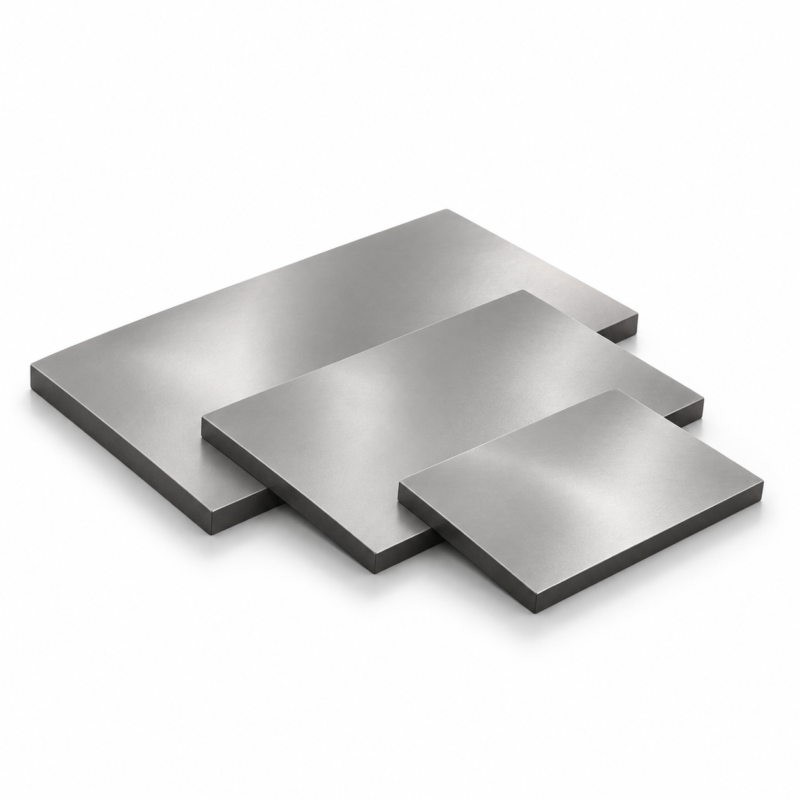
- High Thermal Conductivity: With thermal conductivity ranging from 180 to 230 W/m·K across available grades, AlSiC composites facilitate efficient heat transfer and dissipation in high-power electronic devices.
- Low Coefficient of Thermal Expansion: AlSiC offers a coefficient of thermal expansion ranging from 7 to 16 ppm/°C, depending on the material composition. Its adjustable CTE helps reduce thermally induced stress between different materials in electronic packaging assemblies.
- Lightweight Design: The combination of aluminum and silicon carbide provides a lightweight alternative to conventional copper-based thermal management materials, particularly for weight-sensitive applications.
- High Stiffness and Dimensional Stability: AlSiC composites provide high mechanical stiffness and good dimensional stability, helping maintain structural integrity under demanding operating conditions.
- Improved Thermal Compatibility: The adjustable thermal expansion characteristics allow AlSiC materials to be selected for improved compatibility with semiconductor devices, ceramic substrates, and other electronic packaging components.
- Superior Vibration Resistance: Compared with conventional copper baseplates, AlSiC composites demonstrate superior vibration resistance under tested conditions. Combined with high stiffness, low thermal expansion, and lightweight characteristics, AlSiC helps improve structural stability and reliability in electronic packaging assemblies exposed to mechanical vibration and dynamic loads.
- Customizable Material Properties: Material composition, dimensions, and specifications can be customized according to specific thermal, mechanical, and structural requirements.