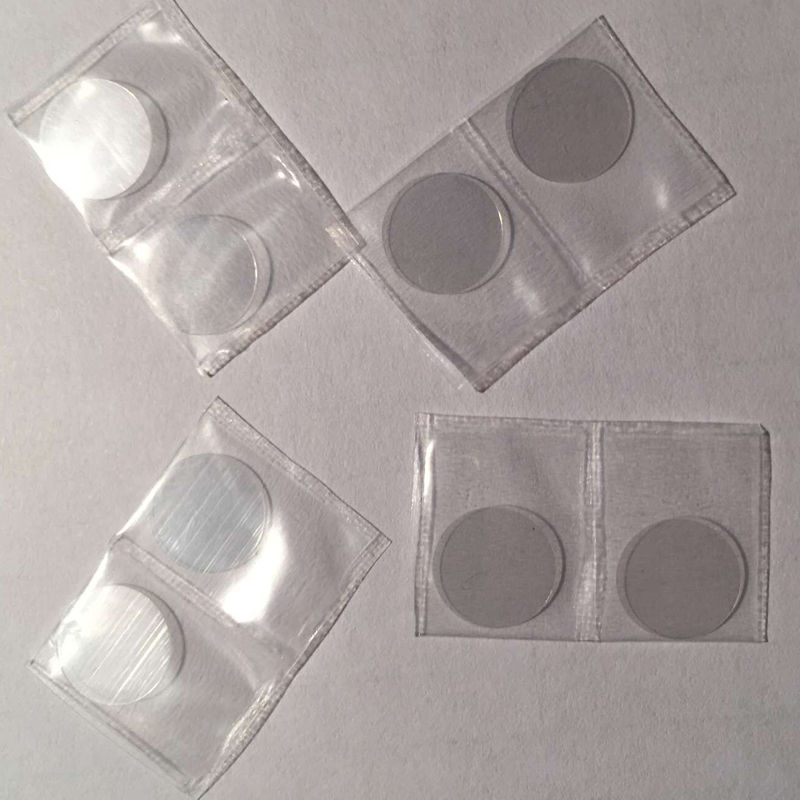
Potassium Chloride (KCl) Crystal
- Broad Infrared Transmission: KCl is transparent over a broad infrared wavelength range, making it useful for IR spectroscopy, analytical instrumentation, and optical window applications. The practical transmission range depends on crystal quality, surface condition, thickness, and environmental conditions.
- Low Refractive Index: KCl has a relatively low refractive index compared with many semiconductor and high-index optical materials, helping to reduce Fresnel reflection losses in certain optical configurations.
- Optically Isotropic: The cubic crystal structure gives KCl essentially isotropic optical behavior, making it suitable for applications where birefringence is undesirable.
- Good Optical Uniformity: High-quality KCl single crystals can provide good optical homogeneity and low scattering, which is beneficial for spectroscopy and precision optical systems.
- Easy Cleavage and Processing: KCl has well-defined cleavage characteristics and can be cut, ground, and polished into a variety of optical geometries.
- Cost-Effective Infrared Optical Material: For selected infrared applications, KCl can provide an economical alternative to more expensive IR optical crystals.
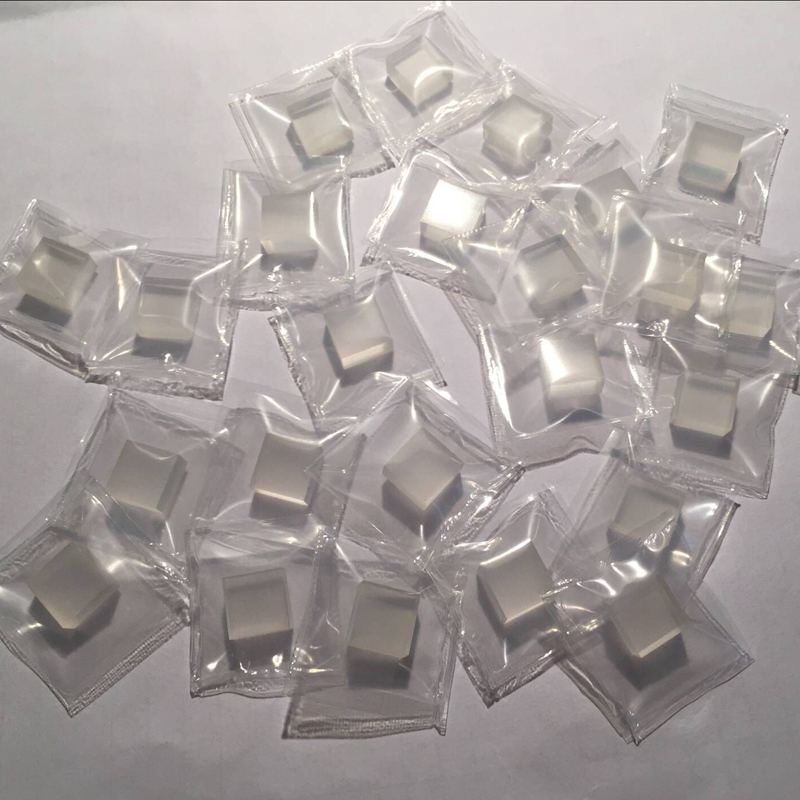
- Important Moisture Sensitivity: KCl is hygroscopic and water soluble. Moisture exposure may degrade the polished surface and affect optical performance. For this reason, proper dry storage, protective packaging, and careful handling are essential.
Custom products or bulk orders, please contact us for competitive pricing!
- Satisfaction Guaranteed
- No Hassle Refunds
- Secure Payments
Description
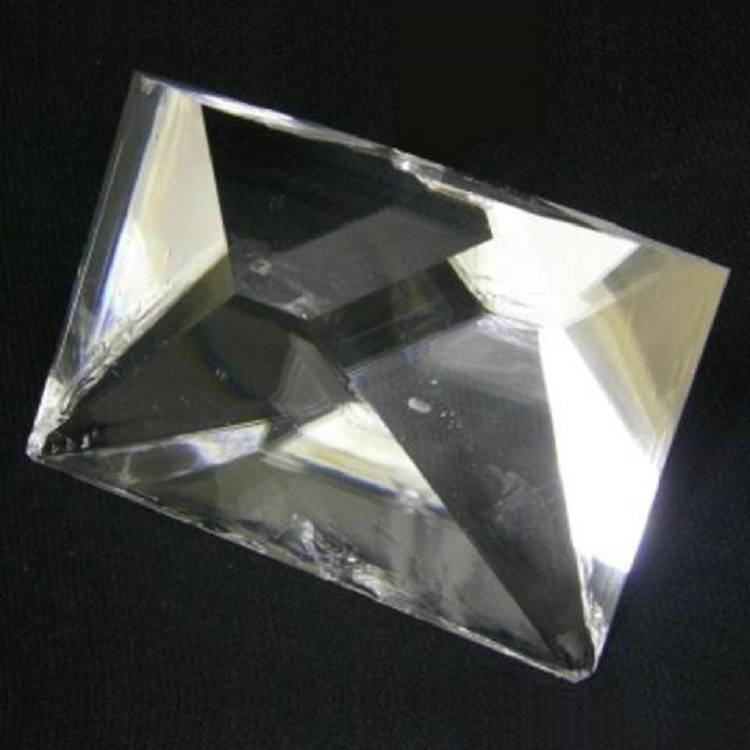
Potassium Chloride (KCl) crystal is a high-purity ionic crystal with a cubic rock-salt structure and excellent optical transmission in the infrared region. KCl crystals are widely used in infrared spectroscopy, optical windows, prisms, research instruments, and specialized optical applications.
With its low refractive index, relatively broad infrared transmission, and excellent crystallographic uniformity, KCl is suitable for applications where a transparent, isotropic crystal is required. As a water-soluble and hygroscopic material, KCl crystals should be handled and stored under controlled humidity conditions to maintain surface quality and optical performance.
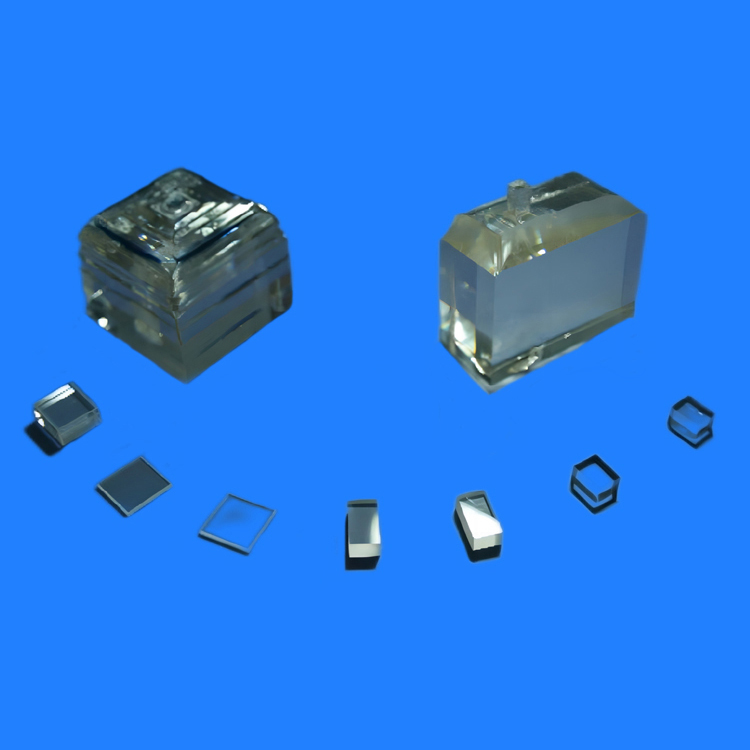
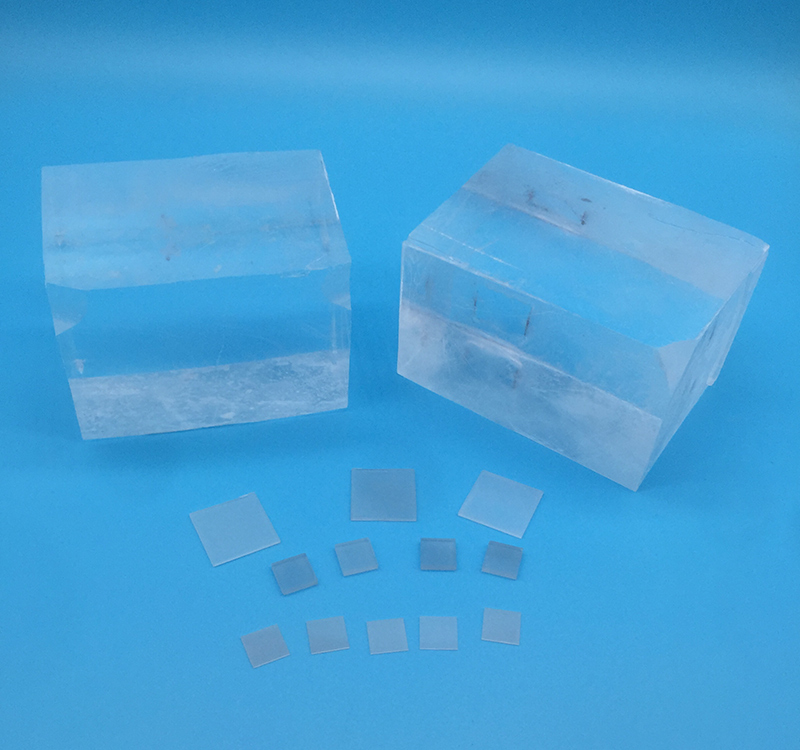
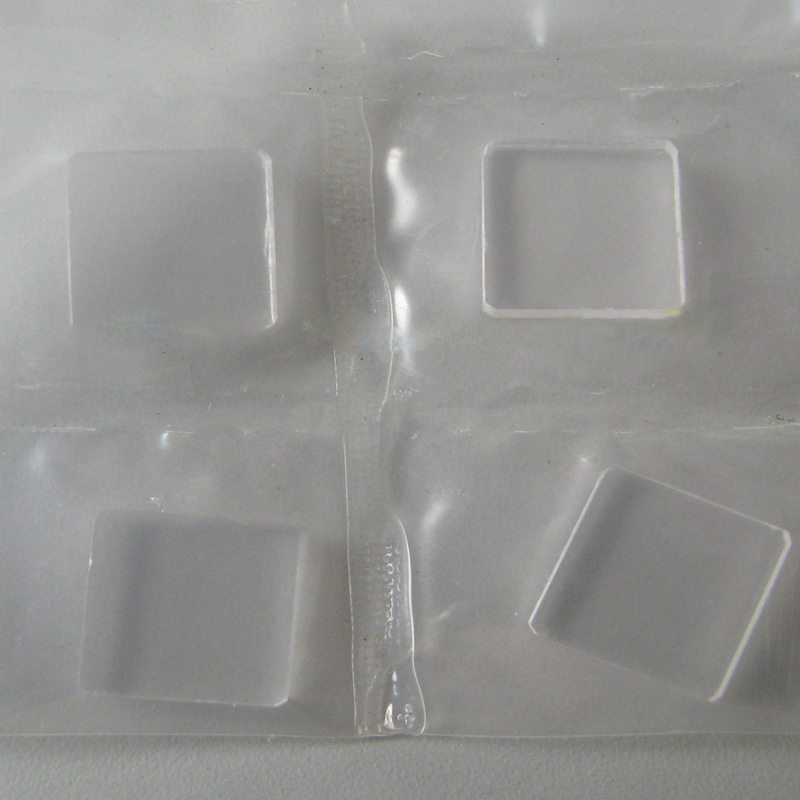
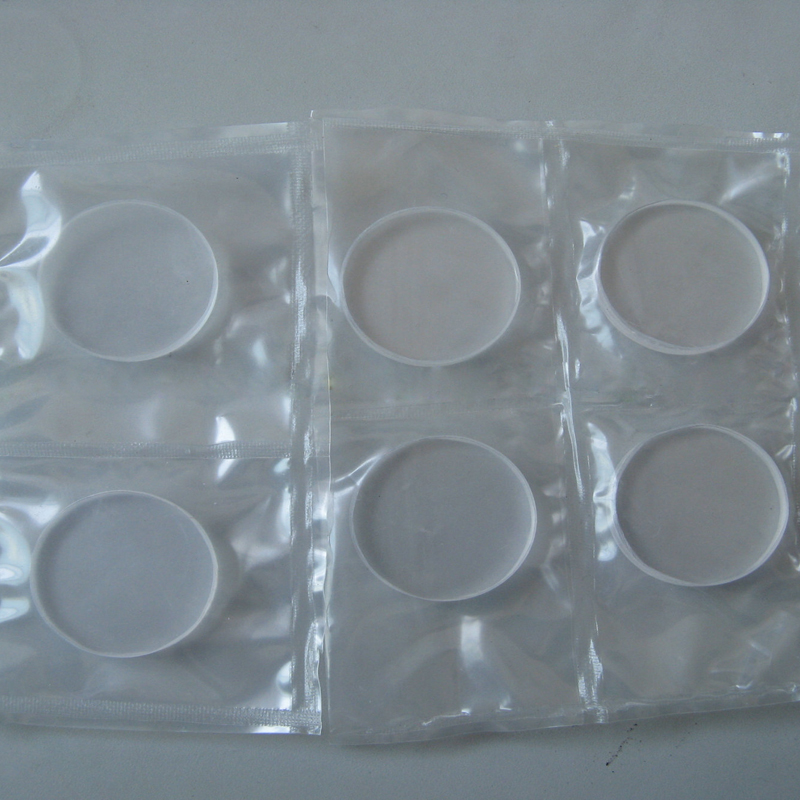
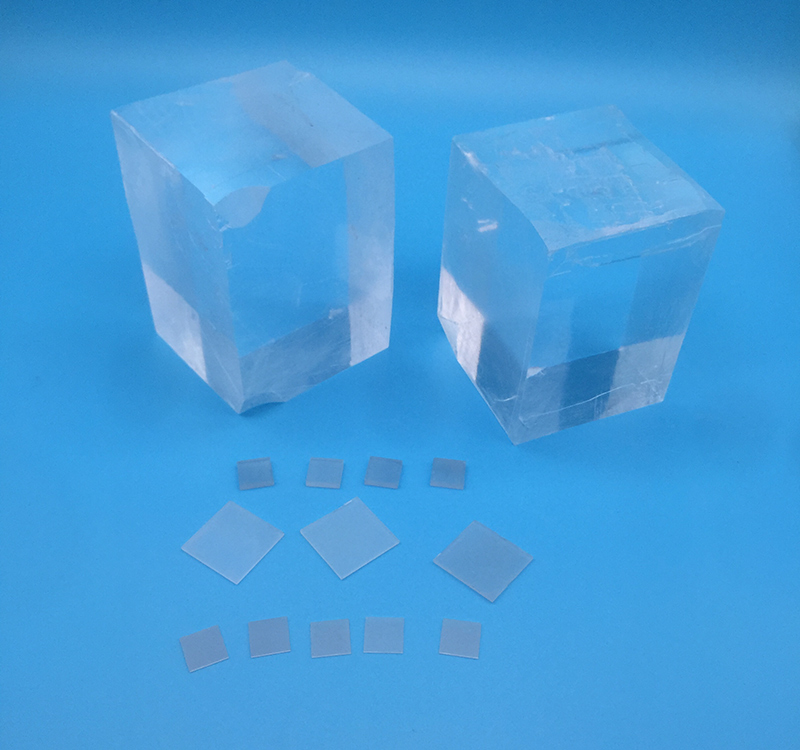
Tinsan Materials supplies KCl crystals in bulk, plates, discs, windows, prisms, and custom-machined forms, with dimensions, orientation, surface finish, and optical specifications available according to customer requirements.
Crystal Structure and Key Properties
KCl crystallizes in the cubic rock-salt structure, similar to NaCl. Because of its cubic symmetry, KCl is optically isotropic and does not exhibit intrinsic birefringence.
– Key Characteristics
- Cubic crystal structure
- Wide infrared transmission
- Low refractive index
- Low optical absorption in its useful transmission region
- Optically isotropic
- Good chemical stability under dry conditions
- Easy to cleave and machine
- Suitable for infrared spectroscopy
- Water-soluble and hygroscopic
– Crystal Structure
| Chemical Formula | KCl |
| Crystal System | Cubic |
| Structure | Rock Salt (NaCl-type) |
| Space Group | Fm-3m |
| Lattice Constant | ~6.29 Å |
| Density | ~1.98 g/cm³ |
| Mohs Hardness | ~2 |
| Melting Point | ~770°C |
| Optical Character | Isotropic |
Key Features and Advantages
- Broad Infrared Transmission: KCl is transparent over a broad infrared wavelength range, making it useful for IR spectroscopy, analytical instrumentation, and optical window applications. The practical transmission range depends on crystal quality, surface condition, thickness, and environmental conditions.
- Low Refractive Index: KCl has a relatively low refractive index compared with many semiconductor and high-index optical materials, helping to reduce Fresnel reflection losses in certain optical configurations.
- Optically Isotropic: The cubic crystal structure gives KCl essentially isotropic optical behavior, making it suitable for applications where birefringence is undesirable.
- Good Optical Uniformity: High-quality KCl single crystals can provide good optical homogeneity and low scattering, which is beneficial for spectroscopy and precision optical systems.
- Easy Cleavage and Processing: KCl has well-defined cleavage characteristics and can be cut, ground, and polished into a variety of optical geometries.
- Cost-Effective Infrared Optical Material: For selected infrared applications, KCl can provide an economical alternative to more expensive IR optical crystals.
- Important Moisture Sensitivity: KCl is hygroscopic and water soluble. Moisture exposure may degrade the polished surface and affect optical performance. For this reason, proper dry storage, protective packaging, and careful handling are essential.
Typical Applications
– Infrared Spectroscopy
KCl crystals can be used as optical windows and components in:
- IR spectroscopy
- FTIR-related instrumentation
- Gas analysis
- Analytical instruments
- Laboratory spectroscopy
– Infrared Optical Windows
KCl windows can be used where broad IR transmission and optical isotropy are required.
Typical applications include:
- Optical windows
- Sample windows
- Instrument windows
- Experimental IR systems
– Prisms and Optical Components
KCl can be fabricated into:
- Prisms
- Optical plates
- Discs
- Windows
- Custom optical blanks
– Research and Education
KCl single crystals are useful in:
- Crystal structure studies
- Materials science
- Optical experiments
- Spectroscopy research
- Crystallography education
– Specialized Optical Research
Custom KCl crystals can be used as controlled optical materials for research involving infrared transmission and crystal properties.
Technical Datasheet – KCl Crystal
| Material | Potassium Chloride Crystal |
| Chemical Formula | KCl |
| Crystal Structure | Cubic, Rock-Salt Type |
| Space Group | Fm-3m |
| Lattice Constant | ~6.29 Å |
| Density | ~1.98 g/cm³ |
| Mohs Hardness | ~2 |
| Melting Point | ~770°C |
| Optical Character | Isotropic |
| Refractive Index | ~1.49 in the IR region |
| Infrared Transmission | Broad IR transmission, application dependent |
| Solubility | Soluble in water |
| Hygroscopicity | Hygroscopic |
| Surface Finish | As-cleaved, ground, lapped or polished |
| Product Forms | Bulk crystal, plate, disc, window, prism, custom blank |
| Orientation | Cubic symmetry; specified orientations available for custom processing |
| Surface Quality | 40/20 or better, according to requirement |
| Flatness | Customizable |
| Coating | Optional, application dependent |
Note: Optical transmission and surface specifications depend strongly on crystal purity, thickness, polishing condition, and handling environment. Final values should be confirmed according to the specific product specification.
Available Product Forms and Customization
Tinsan Materials can supply KCl crystals in various forms depending on the customer’s application.
– Bulk KCl Crystal
Suitable for:
- Research
- Further machining
- Custom optical fabrication
- Crystal structure studies
– KCl Crystal Plates
Available in:
- Square plates
- Rectangular plates
- Circular discs
- Custom geometries
– KCl Optical Windows
Customizable:
- Diameter
- Thickness
- Edge profile
- Surface quality
- Flatness
– KCl Prisms
Custom prism geometries can be fabricated according to optical design requirements.
– Customization Options
- Custom dimensions
- Custom thickness
- Precision cutting
- Grinding
- Lapping
- Optical polishing
- Edge chamfering
- Custom surface quality
- Protective packaging
- Special optical specifications
Why Choose Our KCl Crystals?
– High-Purity Crystal Materials
We offer high-quality KCl crystals selected for optical, research, and spectroscopy applications.
– Flexible Product Forms
Available as:
- Bulk crystals
- Plates
- Discs
- Windows
- Prisms
- Custom optical blanks
– Precision Processing
We support:
- Cutting
- Grinding
- Lapping
- Polishing
- Edge finishing
– Customized Specifications
Dimensions, thickness, optical surface quality, and geometry can be customized according to application requirements.
– Application-Oriented Support
Our team can help customers select suitable product forms and surface specifications for IR optics, spectroscopy, and research applications.
– Global Supply
Professional protective packaging and international shipping support are available for laboratory and industrial customers.
Frequently Asked Questions
Q: Is KCl a single crystal material?
A: Yes. KCl can be supplied as a single crystal with a continuous, ordered cubic crystal structure. It is different from polycrystalline potassium chloride.
Q: Is KCl suitable for infrared optics?
A: Yes. KCl has useful infrared transmission and has historically been used for IR spectroscopy and optical windows.
Q: Is KCl hygroscopic?
A: Yes. KCl is moisture sensitive and can absorb water from humid environments. Proper dry storage and sealed packaging are recommended.
Q: What is the difference between KCl and NaCl optical crystals?
A: Both KCl and NaCl have cubic rock-salt structures and are used in infrared optics. Their transmission characteristics, refractive indices, mechanical properties, and moisture behavior differ, so the appropriate material should be selected according to the wavelength and operating environment.
Q: Can KCl crystals be polished?
A: Yes. KCl can be cut, ground, lapped, and polished to produce optical surfaces. Because of its moisture sensitivity, handling and packaging after polishing are especially important.
Q: Can you provide custom KCl optical components?
A: Yes. Custom plates, discs, windows, prisms, and other geometries can be considered according to size, thickness, surface quality, and optical requirements.
Ordering & Technical Support
Tinsan Materials provides flexible minimum order quantities, competitive pricing, and worldwide delivery. For custom specifications or technical inquiries, please feel free to contact us for a detailed consultation or email us at info@nbsvip.com.